
Trace Former Jefferson County Owners
A chain of title is the ordered set of recorded transfers tied to one tract. It works as a simple timeline. The table below works as a timeline shell for tracing prior Jefferson County owners. It carries no example names or dates. Fill each row from the instrument references for the property you are reviewing.
| Transfer step | Party to follow | Instrument evidence | Next move |
|---|---|---|---|
| Latest recorded deed | Current grantee | Grantor, legal description, recording reference | Search the grantor as prior grantee |
| Earlier deed | Prior grantor and grantee | Matching tract language and plat reference | Repeat the backward index search |
| 1842–1919 image book | Name and adjoining owners on page | Book, year, image, legal description | Browse pages; images are unindexed |
| Probate or fiduciary transfer | Executor, administrator, or estate | Qualification and recorded fiduciary deed | Ask County Clerk Probate about the file |
The current deed is always the strongest anchor. Use the searchable Document Inquiry System whenever it returns a name or document. When the history you want falls outside the online name index, turn next to the 1842–1919 image run. The Clerk's finding aids can guide you as well. Plats, estate files, and local archives make good leads for context. Always return to the recorded instrument to verify a transfer.
Jefferson County Backward Deed Chain
Work backward from a recent instrument you already know. Find the grantee on the current deed. Read the grantor's name. Then search that grantor as a grantee in an earlier period. At every step, compare the legal description, acreage, subdivision, and adjoining tract references. A street address makes a poor historic key once the road or number changed, while the parcel's written description can carry a chain straight through the older books.
Read Jefferson County Deeds Backward
Pair every name with the transfer that supports it. A shared surname alone proves nothing. It does not show that two index entries concern the same parcel. Jefferson County publishes no stated coverage cutoff for the modern Document Inquiry name index, so treat name results as leads only and compare the recorded legal description before adding any link to the chain.
- Open the newest deed for the parcel and write down its grantor, grantee, date, and reference.
- Search the grantor as a grantee in the prior period and compare the land description.
- Follow any plat, deed-of-trust release, life estate, or fiduciary instrument that changes the apparent chain.
- When name indexing stops, move to the relevant book and image sequence or ask the Clerk for a finding aid.
- Grantor
- The party that conveys an interest in the deed.
- Grantee
- The party that receives the stated interest.
- Chain of title
- The ordered sequence of recorded interests tied to a tract.
- Legal description
- The written land description, often more stable than an address.
Jefferson County Deed Images, 1842–1919
The County Clerk's online collection holds deed-book images from 1842 through 1919. Nothing in it is indexed by name. Open Image Search, pick the right book from the County's linked book list, and browse. To keep the job manageable, pull the current deed's grantor and prior legal description. Add the book reference and likely date range before you start. Then compare names and adjoining land descriptions as you move through the old pages.
The earliest year covered by the modern Document Inquiry index is not stated anywhere. So avoid claiming the searchable index ends in 1919. The online image run does not mark the start of the county's land-record system either. For records predating the image set, contact the County Clerk. For a stubborn name match, ask about the older book finding aids.
Note: The County Clerk's own notice explains why historic Jefferson County deeds require image browsing rather than a name lookup.
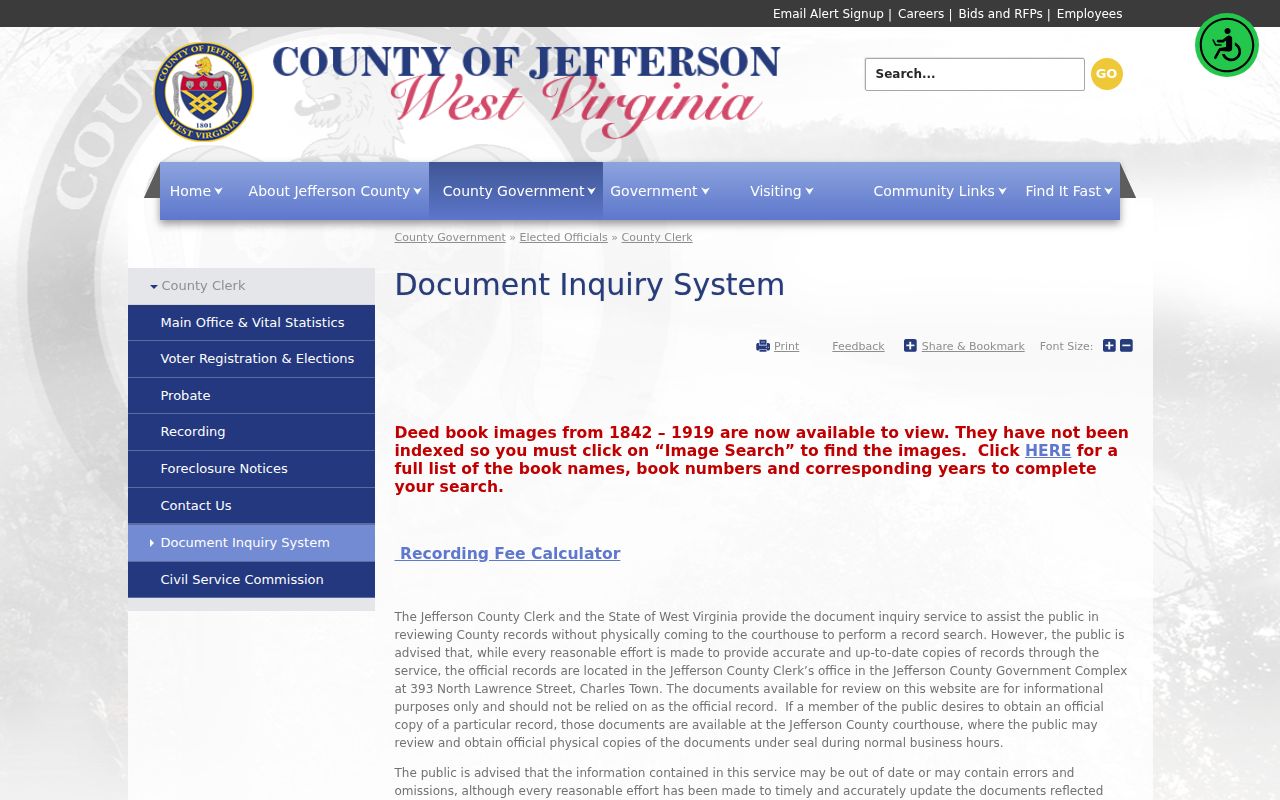
In this era, a missing name result is not a dead end. It is your cue to inspect the book pages and legal description by hand.
Jefferson County Probate Name Changes
Probate files can explain a puzzling gap. The gap sits between the person named on an older deed and the next grantee. Jefferson County Probate handles wills, qualification papers, inventories, and property-transfer records. A fiduciary deed can move estate land to a later owner. An executor or administrator signs it. Jointly held land with survivorship, though, may pass entirely outside the estate. So a death does not always produce a probate conveyance.
The County asks researchers to schedule an appointment with a probate clerk. It publishes no online case index, archived-year list, or copy fee schedule. Use the fiduciary name from the deed as your lead. Call ahead. Then confirm the land transfer in the recorded instrument, rather than treating the estate file alone as title.
Note: The County Clerk's probate page describes the appointment process and real-property transfer papers.
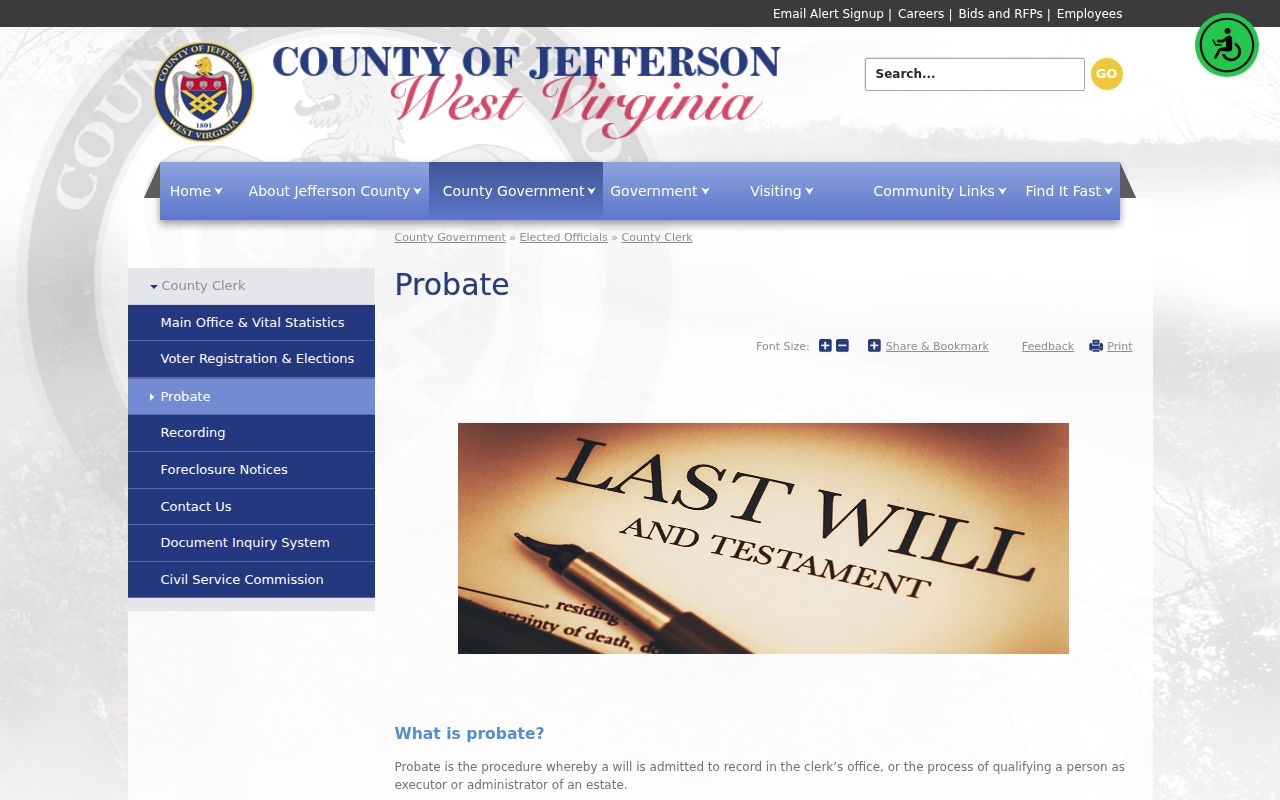
Let the estate record explain a fiduciary transfer. Then return to the deed chain for the parcel evidence itself.
How Far Jefferson County Records Reach
Jefferson County's known local thresholds include marriage records back to 1801 and birth and death records from 1853. Deed-book images cover 1842 through 1919. Each is a separate collection with its own access rules. The county publishes no cutoff year for the modern deed name index. No courthouse fire or records-loss event appears in its history. A chain that stops online is never proof the underlying book is missing.
Known historic route. Jefferson County deed-book images for 1842–1919 can be viewed online by book and image, but the run is not name-indexed. The modern index cutoff was not verified, so check with the Clerk before assuming a gap.
Jefferson County Plats and Former Owners
Older parcels tend to be described by streams, roads, acreage, and adjoining owners. Newer divisions lean on a subdivision plat, lot, and block instead. Jefferson County Plat Books 1 through 25 are downloadable through the Assessor. The Clerk links a Plat Search. The 2025 zoning map sits in Plat Book 27, Page 651. Use the plat to see how a tract was divided. Then confirm the conveyance in the deed.
A map can surface the named subdivision or a changed road that unlocks a former-owner search. But it proves nothing about the current line. Keep the plat reference beside the deed reference and compare both against the assessment parcel. That habit pays off when old acreage was split into smaller lots. It also helps when a street name changed.
Jefferson County Archive Leads
A good archive request starts with something searchable. Bring an old street name, a subdivision, a family surname, an approximate decade, or a deed book and page. The museum, the library, and the Historical Society can surface maps, citations, and context that a parcel number alone never shows. Their databases are no substitute for land books. Ask about digitization first. Confirm whether an appointment is required before you travel, and record the source and call number for every clue. Then take each clue back to the county instrument and test whether the name, date, and parcel description connect to the chain being traced.
One archive clue can open a deed book. The Jefferson County Museum holds land documents, maps, newspapers, correspondence, diaries, and business and legal records. Few non-photo resources are digitized. An appointment may be needed. Its database is a discovery aid, not a deed index.
Note: The Museum's research page describes its holdings and explains how to arrange access to its appointment archive.
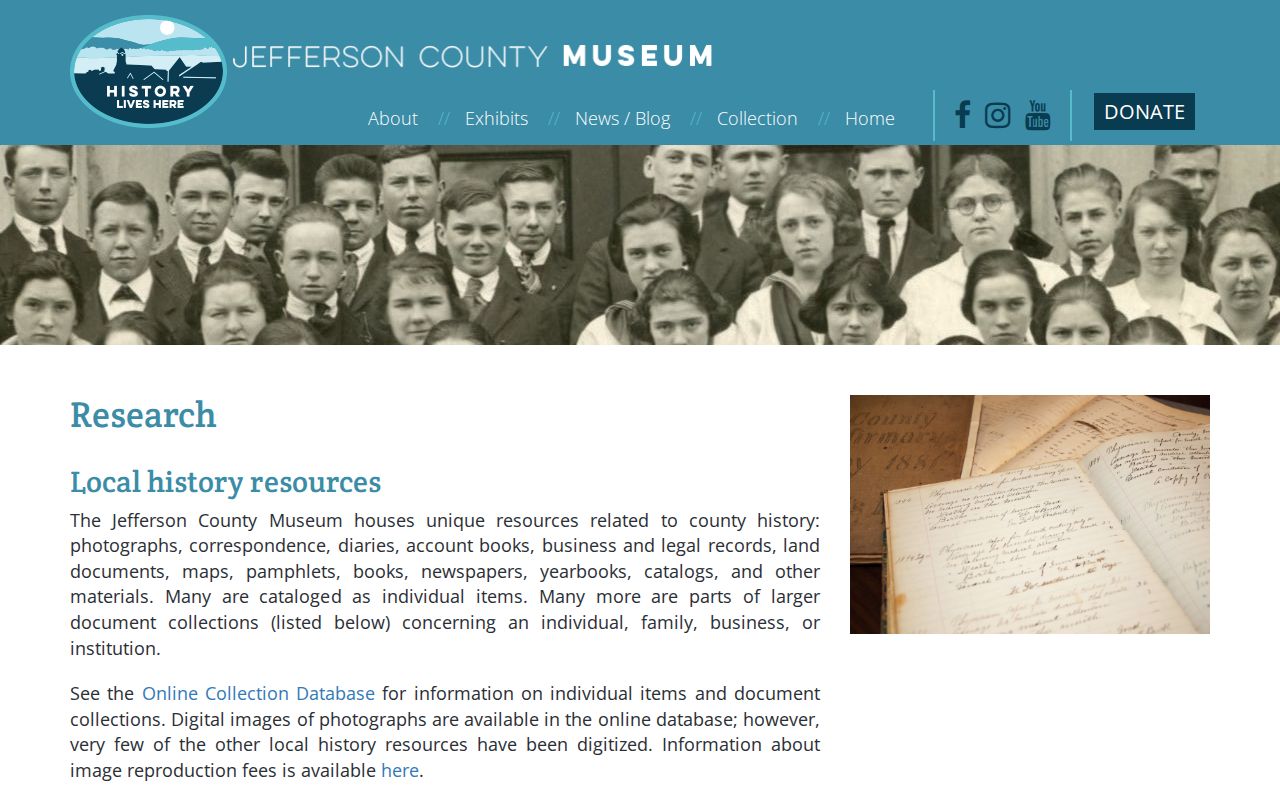
A museum lead supplies the name or date. Take that detail to the County Clerk, whose recorded instruments confirm any legal transfer. The archive points the way; the deed record proves it.
Library tools can add household and newspaper context. The Historical Society maintains a research room and a publications archive reaching back to 1935, though neither replaces a recorded deed.
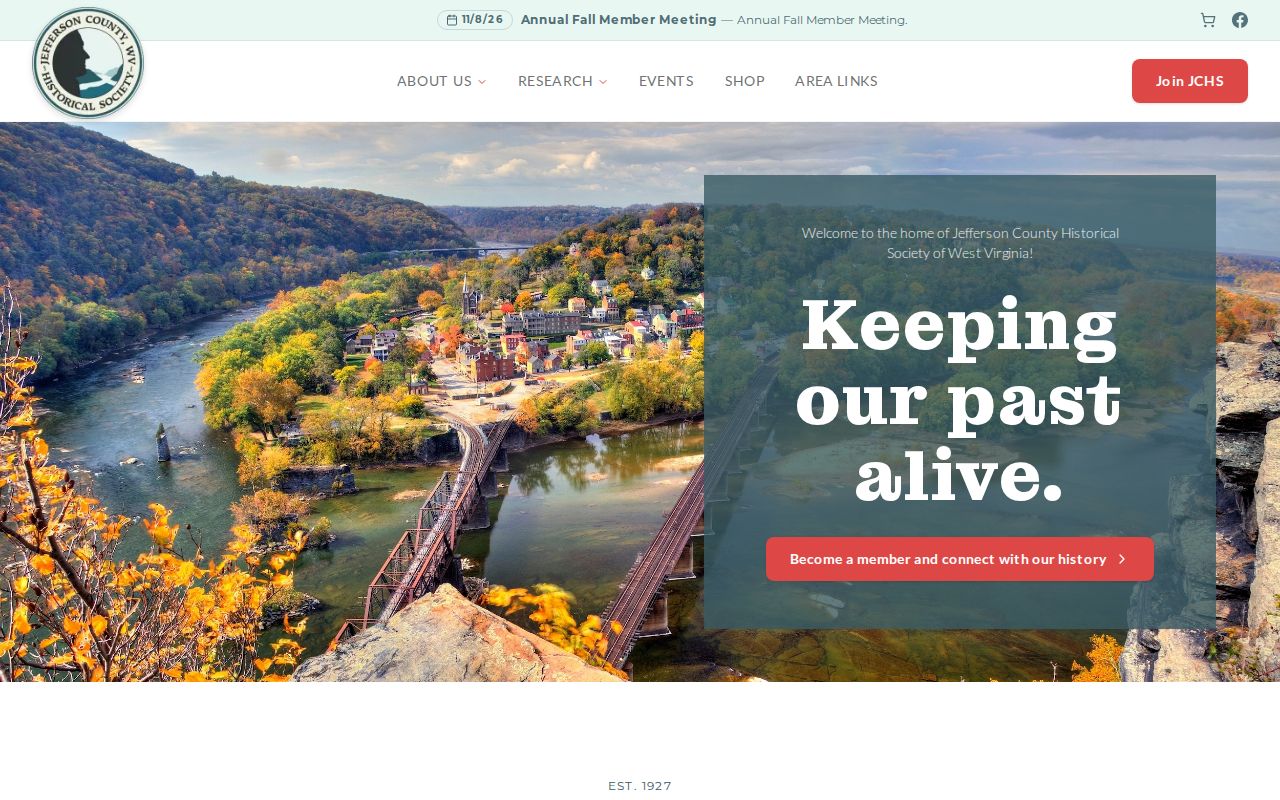
Local history references can guide a Jefferson County property records search. The County Clerk stays the custodian for recorded ownership instruments.
Vital Records Behind Jefferson County Transfers
Vital records explain deeds more than they create them. A death or marriage record can account for an estate transfer or a name variation in a deed chain. The certificate itself conveys no land. Jefferson County marriage records date to 1801, and local births and deaths to 1853. Birth records become public after 100 years, the County states, while death and marriage records open after 50. Current records carry restrictions.
County vital copies cost $5. State certified copies cost $12 through the documented channels. A state marriage request asks for names, date, place, relationship, a signature, photo ID, and proof of relationship when you order another person's record. Use them only for lawful genealogy or estate work. The property transfer itself rests on the deed or fiduciary instrument. The state office lists certified-copy channels for West Virginia vital records, useful for corroborating an estate or name change.

A certified vital record supports the family link. The land instrument alone remains the proof of a recorded conveyance in Jefferson County.